

Tucked away in the chaotic archives of the BITS Pilani Goa Campus website is a page listing the annual reports of BITS Pilani. The 2025 Annual Report is a document spanning 1,600 pages, detailing everything from admission statistics and placement data to research grants and university finances. It has sections dealing with each of the four constituent STEM campuses – Pilani, Goa, Hyderabad, and Dubai. The EPC perused the Annual Report to bring our readers insights into the workings of BITS as a whole, and the Pilani Campus in particular.
BITSAT & Admissions
2025 saw 150,730 students write the BITSAT, for a chance at 3,186 available seats across the three Indian STEM campuses. We calculated that BITS Pilani has an acceptance rate of 2.11% via BITSAT (an increase from the stricter 1.19% acceptance rate in 2016). Roughly a tenth of the current intake is students enrolled in 2+2 international collaboration programs.

The BITSAT began in 2005 and, at the time, was the first ever pan-India computer-based admissions test. Prior to that, admissions took place through 12th grade board exam scores, which BITS normalised. The Annual Report details historical statistics for the same, where the highest scoring admit consistently had a (normalised) 100% in their boards, starting from 1978 and all the way till the BITSAT was introduced. In the 1990s, the cutoff hovered around the top decile of percentages and peaked at 98.4% in 2003.
Placements & PS-II
For placements that took place at the Pilani Campus in 2025, of 1,315 total undergraduates, 1,091 sat for placements, and 972 received offers. This means that BITS Pilani, Pilani Campus had a 2025 undergraduate placement rate of 89%. The number of companies that visited for placements was 301. As for the other campuses, Hyderabad saw 292 companies, and Goa saw a 93.6% placement rate with 289 companies.
The graph below illustrates the branch-wise outcomes of the single-degree students (singlites) at Pilani who participated in the 2025 placement drives.

The Annual Report also presents some interesting statistics regarding the PS-II programme. The largest recruiter for PS-II, across all campuses, was Flipkart, hiring 92 student interns. Next up were Amazon (76 students) and Texas Instruments (72 students). Nearly 40% of PS-II stations were based out of Bengaluru, 18% were out of Mumbai, and 13% were out of Hyderabad.
While the more geriatric among the student populace concern themselves with PS and placements, aspirants and freshers pose the eternal question to their seniors: ‘What are the chances I get a verti?’
Branch Transfers
The Annual Report throws some light on the likelihood of the coveted verti or branch change. In the 2024-admitted batch at Pilani, 13 singlites and 5 dual-degree students (dualites) got their branch changed to a different single-degree. Besides this,18 dualites got their branch changed to a different dual-degree. For context, the batch size was around 1,000 (excluding 2+2 students).
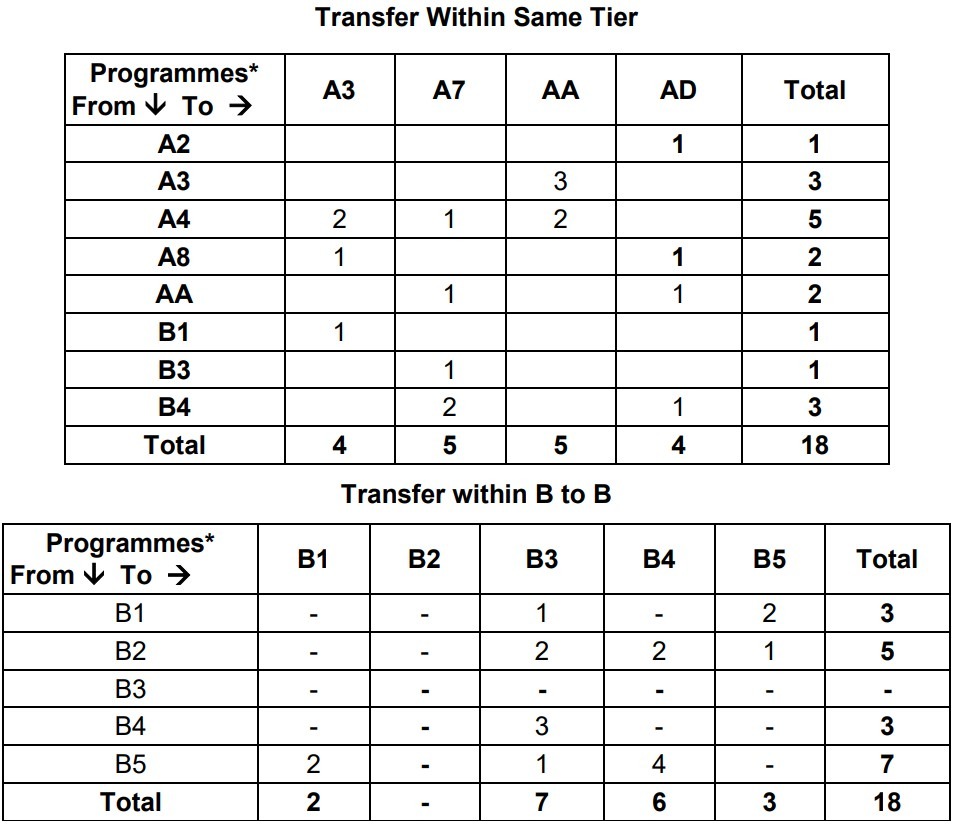
A little-known feature of the academic system is that a first-degree student may apply to have a higher degree appended to their time at BITS. Over the last two years, 15 undergrads took such a transfer to an ME programme (for example, BE Electronics & Communication to ME Embedded Systems).
Institute Finances
The university’s invested financial corpus stands at ₹2,193 crores ($232 million). BITS Pilani’s endowment fund reached $45 million in April 2026, fuelled by alumni contributions. As a result, the institute now offers more than 300 alumni-funded scholarships, in addition to existing institutional aid programmes. Starting from the academic year 2026-27, the family income limit to avail the Merit-cum-Need (MCN) scholarships has been raised from 15 to 20 lakhs per annum. The BITS administration’s long-term goal is that of a $100 million endowment fund.
For context:
IIT Bombay has a corpus of $72 million, and an endowment fund of $106 million.
IIT Delhi has a corpus of $39 million, and an endowment fund of $107 million.
IIT Madras has a corpus of $97 million, and an endowment fund of $36 million.
In the financial year 2024-25, the institute disbursed around ₹15 crores in financial assistance to students. MCN scholarships made up a third of this figure, and fellowship stipends made up another third. The excess of the university’s income over its expenses, for this period, stood at ₹474 crores.
All in all, the Annual Report provides an insight into the massive machinery behind BITS, in its journey from a pathshala in the sands of Pilani, to an institution that spans five (soon, six?) campuses and 20,000 students. While complaints about the powers-that-be abound, it is evident that from the administration to the alumni, a lot of work goes into keeping the BITSian experience alive and kicking.
Check out the Annual Reports of the last decade here.